Why Clients Want to See and Touch Materials in Person Again
What is the first thing you do when you see an item of clothing, a book, or a pretty shell you spot when you walk along the beach? You hold it, you touch it, and it opens our senses, letting us ‘see’ it more.
In an age where almost everything can be sourced online, I’ve noticed an interesting shift happening in interior design. Increasingly, my clients are expressing a strong desire to see, feel, and experience materials in person before making decisions for their homes.
While digital tools, mood boards, and online sourcing remain incredibly useful, they simply cannot replace the sensory experience of physically interacting with materials. More and more, my design process has become far more tactile and experiential again.
The Limits of Designing Through a Screen
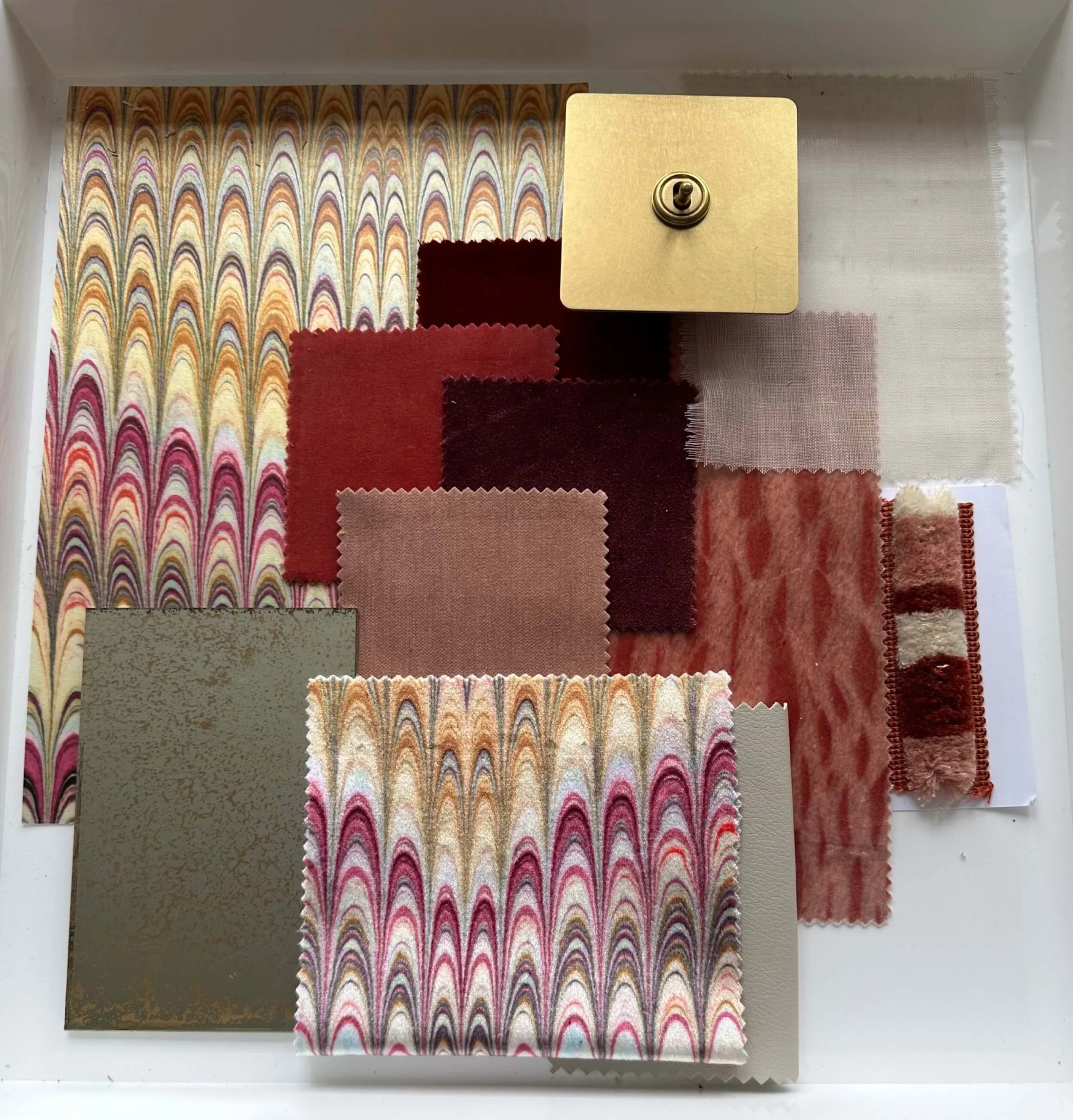
Experience the feel and colour of the actual materials
Over the past 15 or so years (Pinterest launched in 2010), digital platforms have transformed the way we design and shop for interiors. Fabrics, furniture, lighting, and finishes can all be discovered online, often with just a few clicks.
However, images and screens can only tell part of the story — something that often comes up in conversations with clients during the design process.
A photograph may show the colour of a fabric, but it can’t communicate:
The softness of the texture
The weight of the material
The subtle undertones in a paint colour
The way light interacts with a surface
More importantly, how does it make you feel
A velvet that appears rich and luxurious online may feel very different in natural light or when touched in person. Similarly, a stone surface might reveal depth and character that simply doesn’t translate digitally.
Why the Tactile Experience Matters
Interior design is inherently sensory. The materials we choose influence not only how a space feels and looks, but also how we feel within it. For example, the thought of someone pulling off woollen gloves with their teeth makes me shudder, so anything that feels remotely like that in my own home is a definite no-go!
I often find that when clients can physically interact with materials, everything becomes clearer. Holding a fabric sample, placing it next to a paint colour, or seeing a stone finish in natural light helps them truly understand how those elements will work within their home.
Clients can feel the grain of a timber finish, see how a metal detail reflects light, or understand the scale of a pattern in a way that simply isn’t possible online.
This tactile process helps clients feel far more confident in their decisions and ensures the finished design feels exactly right.
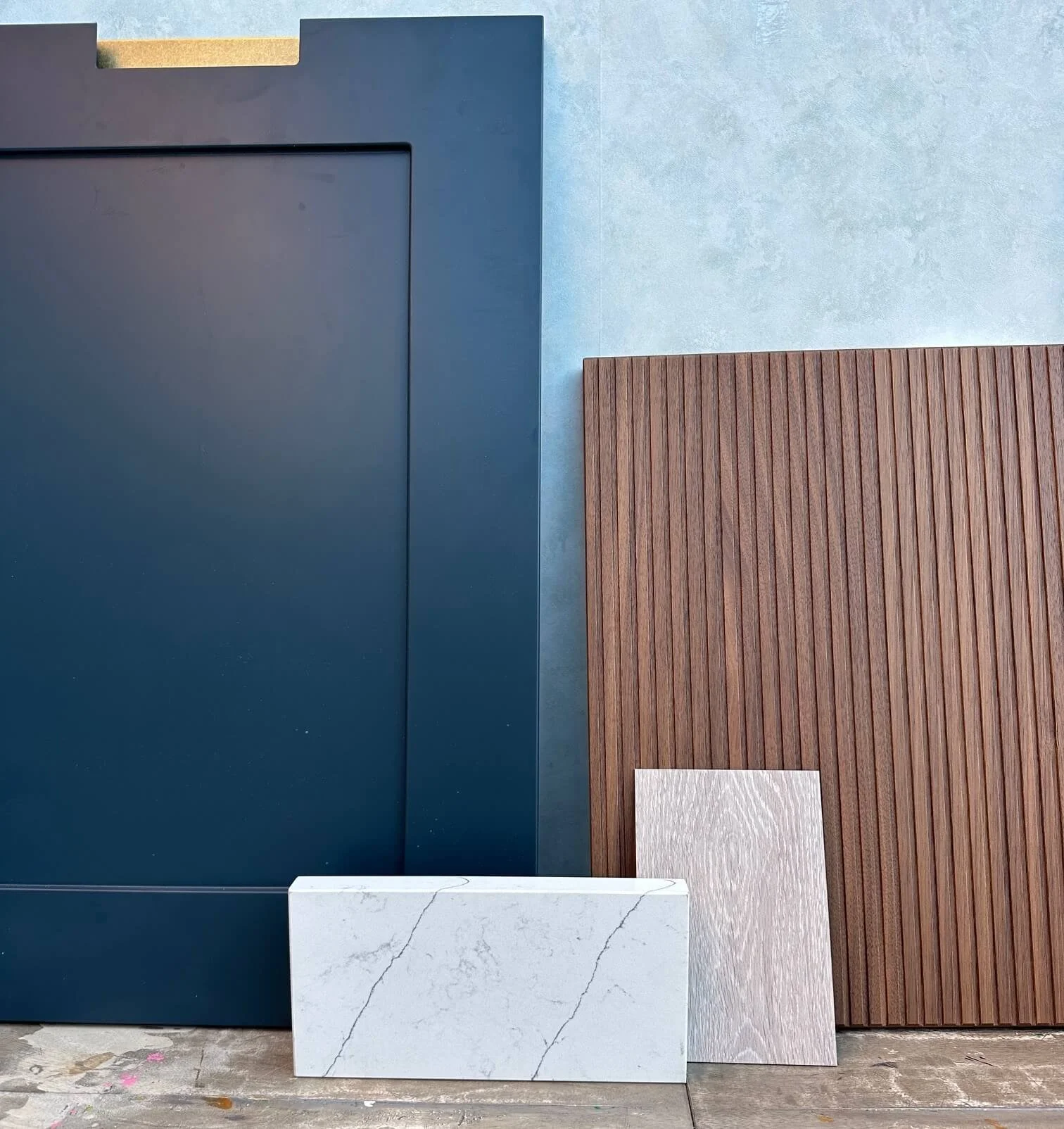
Engage with the quality and detail
The Rise of the Design Studio Experience
Because of this growing desire for hands-on involvement, design studio meetings and showroom visits have become more important than ever in my process.
Clients increasingly enjoy sessions where we can:
Explore fabric libraries
Compare material samples side by side
Experience furniture proportions in person
Discuss ideas while physically interacting with design elements
These moments often spark new ideas and conversations that simply wouldn’t happen over email or through a screen. Sometimes, what the client thinks they want/like can change when they have a sample in hand.
Slowing Down the Decision Process
Another positive outcome of this shift is that it encourages a more thoughtful approach to design. When clients take the time to physically explore materials, decisions are often made more carefully and with greater confidence.
Rather than relying solely on digital inspiration images, they begin to engage with the craftsmanship, quality, and detail behind each design choice.
This often leads to interiors that feel more considered, layered, and personal.
A Balance Between Digital and Physical
Of course, digital tools still play an essential role in modern interior design. Online platforms allow us to research, visualise, and communicate ideas quickly and efficiently.
But the most successful projects often combine the best of both worlds: digital inspiration paired with real-world experience.
Seeing, touching, and experiencing materials in person helps transform abstract design ideas into something tangible and meaningful.
Designing with the Senses
Ultimately, a home should feel as good as it looks. (I also think smell links in with this, but let's save that for another post.) As I employ a more tactile design process, I’m seeing clients reconnect with the importance of materials, craftsmanship, and sensory experience when creating their homes.
And that, perhaps, is what great interior design has always been about.